 NearEats
Solo dining without the awkwardness: venues that make it easy
A table for one feels awkward because of where you sit and when you go, not because you are alone. Here is how to make a solo visit work, from the counter seat to the fancy restaurant.
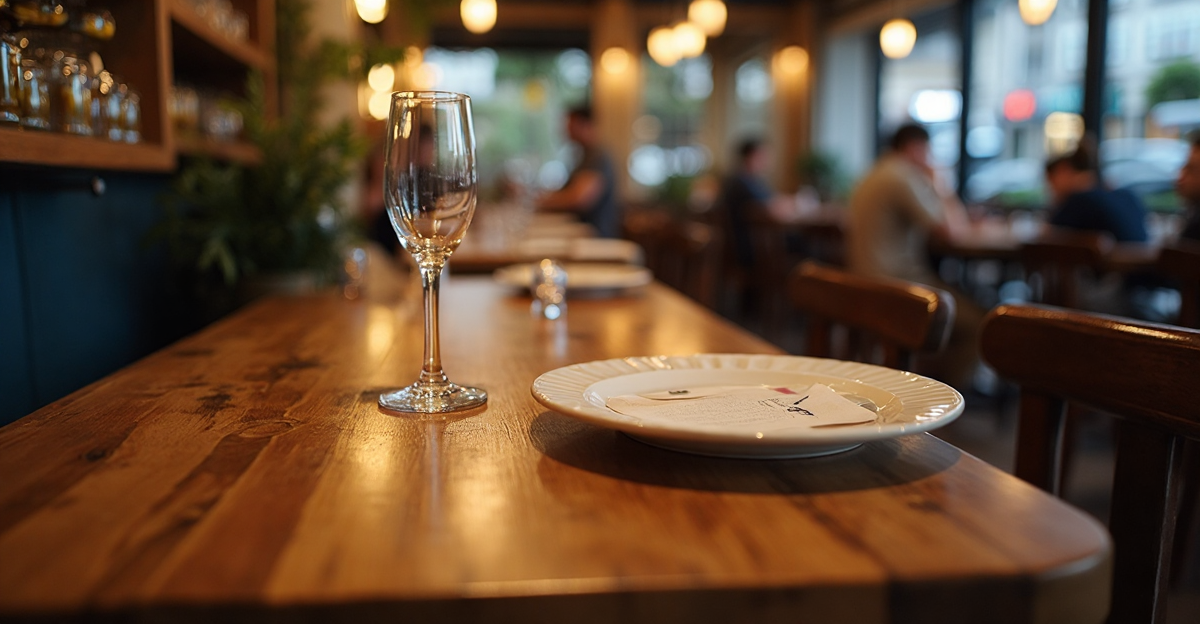
"Do you go to fancy bars and restaurants alone?" It is the question you ask a stranger at some point, or the question you are asking yourself right now, sitting at a table for two while the empty chair looks a little too deliberate.
The awkwardness you are imagining is real, but it is mostly a problem of seat and timing, not of character. Plenty of people eat and drink out alone, every day, in many cities, and most solo dinners that go badly fail for the same few avoidable reasons: the wrong table, the wrong hour, and expectations set by a room that was never built for you.
All of that can be checked before you sit down. This is the check, plus the venue types where solo works from the start.
Pick the seat before you pick the place
The same restaurant feels like a different place alone, depending on where you are sitting. A table for two facing the room puts you in the view of everyone who enters and leaves, with one empty seat beside you. A counter seat along the wall puts you facing the kitchen, the bar or the street: you have something to look at, and the rest of the room becomes background.
The awkwardness of sitting alone is mostly a seating problem, not a solitude problem: a seat that faces the room feels exposed, a seat that faces something does not.
That is why the same venue is fine on a Tuesday at the counter and unbearable on a Saturday at the corner table. If a place has any seat that works for one, that is the seat you want — and the seat you ask for when you book.
Venue types that are built for one person
Some venue types work for one person by design. The ones that come up most, and the catch on each:
- Counter seating and open kitchens. You watch the work happen and there is something to look at for the whole meal. The catch: counter seats are often first-come, and the good counters fill early in service.
- The bar of a pub or cocktail bar. You order at the bar, the staff know the room, and a single seat at the bar is the default, not a problem. The catch: the food is often limited, and in some places the bar is standing only.
- Communal or shared tables, as in food halls and market stalls. Strangers sitting together is the design, not an accident. The catch: the noise, and the pace of the room.
- Cafes and all-day places. Laptops, books and single diners are common. The easiest seat in many cities for a slow meal on your own.
- Ramen-style counters and food-hall stalls, in the places where that format exists. One person, one seat, quick order, quick out. The catch: the format is not universal, so do not expect it in every city.
- Hotel bars. A hotel bar is used to one person with one drink, and that is the whole visit. The catch: it is usually not dinner, and the food story ends there.
One caveat runs through all of it: how welcome a table for one is, and how these customs play out, varies by country and by city. The venue types are the same; the norms are local, so the door is worth a look.
Making a solo visit work at a fancier place
The fancy-restaurant version of this works too. The difference is that you say the thing out loud and check it, instead of walking in and hoping:
- Book for one, and say where you want to sit. Say 'a table for one, and a seat at the bar or counter if you have one.' Many places keep bar and counter seats that cannot be reserved in advance — asking is worth it, and it costs nothing.
- Go at the quiet edge of service. Early in the evening, or midweek, is less exposed than Saturday at the height of it. This works at any venue, not just the fancy ones.
- Bring something to do, without apology. A book, a notebook, a phone. A long meal has gaps, and having something to do in them makes a two-hour solo dinner feel like an evening out instead of a vigil.
- Ask about the menu before you commit. If you want less, ask for a shorter menu or the bar menu. If the kitchen runs a tasting menu, ask whether they serve it to one person: pairings, minimums and half portions are the venue's decision, and the only way to know is to ask.
- Do not assume you will be turned away. Some places cannot take a party of one at all — a twelve-seat chef's counter, a room built for groups — and some will, happily. Policies differ, and this post cannot tell you about a specific one. One short phone call answers it.
At a fancier place, saying ‘table for one, and a seat at the bar or counter if you have one’ — when you book, or when you arrive — does most of the work: it turns an awkward walk-in into a request the staff can answer.
Tipping, service charges and how bar ordering runs all vary by country and by venue, and the way you learn them is the same as learning anything else about a new city — slowly, and one visit at a time. That learning curve is covered in finding your regular spots in a new city.
What to check before you sit down
Two minutes, before you leave the house:
- Is there bar or counter seating? That is the seat where a solo dinner works, and most maps will not tell you. A phone call or the venue's own page settles it.
- Is it open now, and until when does the kitchen serve? The bar staying open past the kitchen is common, and "open" on the sign can mean drinks only. The detail on what open now actually claims is here.
- Does the menu work for one? A menu built of sharing plates means your dinner is four plates at group prices; a place with small plates and single portions makes one person a normal order, not a special request.
- Is there a minimum spend or a time limit? Some bars and counters cap how long you can keep a seat on busy nights, so ask if you plan a long meal.
- Do you need to book for one? The better places book out solid, and a walk-in on a Friday is a coin flip.
- The practical bits: diet and access. If you need a specific diet or step-free access, the same pre-check applies — check it before the walk, not after.
You can run all of this the old way — the phone call, standing on the street corner reading the menu, asking at the bar — and that works fine. A map check is faster for the open-now and the amenity items: NearEats, for instance, shows whether a place is open right now, how close it is to closing, and details like outdoor seating, so you can rule places out before you walk — with the same honest limit as any map data, that the details can be out of date. Whatever the check, the seat and how solo-friendly the room feels are judged from the door.
The point of the list is not to plan the evening. It is to make the visit a decision instead of a gamble.
When solo is the wrong call, and when to leave
A few situations where sitting down alone is a bad fit, and the honest answer is another night or another place:
- A set sharing menu where nothing works at one portion.
- A room that is loud by design, where your table is in the middle of it and your only conversation is with nobody.
- A venue that is full of parties, where a table for one reads as a mistake to the staff. If the vibe is wrong, the fix is a different visit, not a performance.
And when the visit starts wrong, the fix is usually one seat away: ask to move to the bar or the counter, and a lot of rooms get quieter and easier the moment you stop facing the entrance. Leaving before the meal is done is allowed too; you do not owe the kitchen the rest of it.
One last note, plain and short: keep an eye on your drink and your tab, and if you are in a city you do not know, telling someone where you are takes ten seconds and costs nothing.
The short version
- The awkwardness is mostly a seating problem: a seat facing the room feels exposed, a seat facing something does not.
- Counters, bars, communal tables, cafes and food-hall stalls are built for one person. Know the catch on each.
- At a fancy place, book for one, ask for the bar seat, and go at the quiet edge of service.
- Check before you sit: bar seating, kitchen close, a menu that works for one, minimums or time limits, and whether a booking is needed.
- If the visit starts wrong, move the seat or leave. You do not owe anyone the rest of the evening.
Common questions
Is it weird to eat at a restaurant alone?
In many places, no. In counter and food-hall cultures it is the default, and even where it is less common, a calm diner with a book at the counter gets no second look. What makes it feel awkward is usually the seat and the room, not the fact of being alone: pick a seat that faces something, go at the quiet edge of service, and the visit reads as normal.
Where should I sit when dining alone?
At the counter or the bar, if the place has one. A seat facing the kitchen, the bar or the street gives you something to look at and keeps you out of the room's social flow. The corner table facing the door is the seat to avoid. If you book, say it out loud: table for one, and a counter seat if you have one. Many places keep those seats for walk-ins, so asking costs nothing.
Can you go to a fancy restaurant by yourself?
Yes, with one adjustment: you say the thing and check it, rather than walk in and hope. Book for one and ask for a bar or counter seat, go at the quiet edge of service, and ask before you commit whether the kitchen serves tasting menus to one person. Pairings, minimums and half portions are the venue's decision. Some small places genuinely cannot take a party of one, and one phone call settles it.
Drafted with AI, then reviewed and edited by Robert Jensen before publishing.
Know where to eat before you start walking
NearEats shows the restaurants, cafes and bars around you — with what's open right now, diet options, step-free access and real walking time. One-time $1.99, no subscription.

Keep reading
Moving to a new city: finding your regular spots in the first month
The first month in a new city is when you eat well by accident and badly by default. Here is how to turn that into a short list of places you will actually keep going back to.
How to find a place open late in a city you don't know
It is 22:30, the flight was long, and every restaurant within walking distance is closing at 22:00. Here is how to find a place that will still be open.