 NearEats
How to find a place open late in a city you don't know
It is 22:30, the flight was long, and every restaurant within walking distance is closing at 22:00. Here is how to find a place that will still be open.
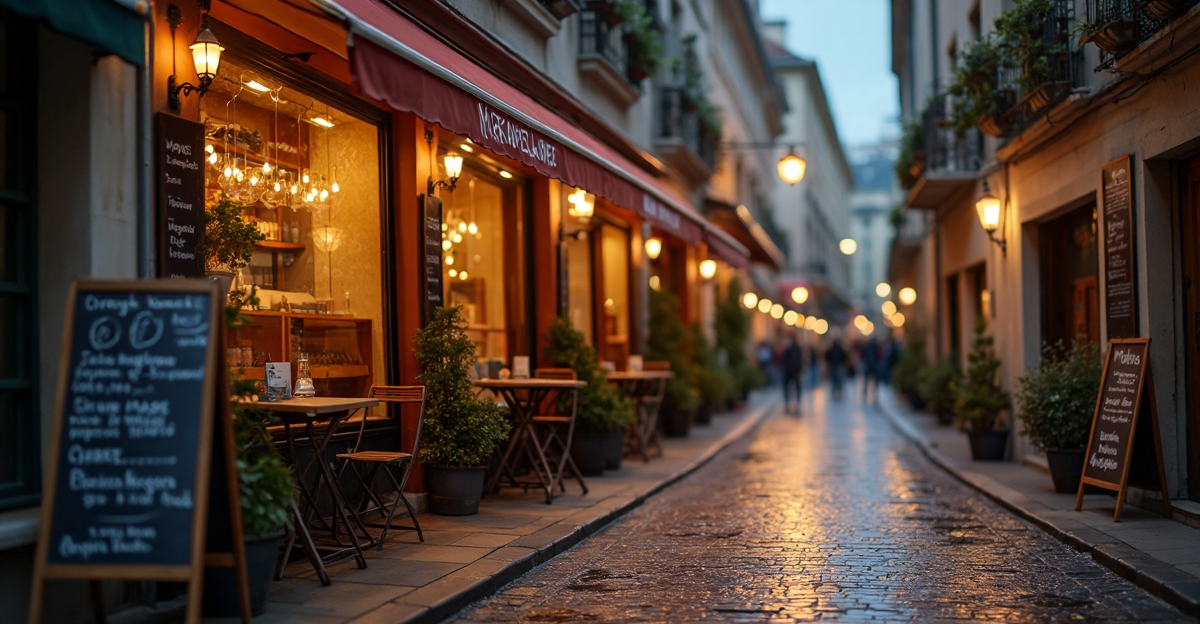
It is 22:30. The flight was long, the walk from the station took longer than the sign said, and every restaurant you can see is posting its closing time. This is the exact moment eating out stops being a decision and starts being a search, and in a city you do not know — in a language you do not speak — it is the moment most of your plan falls apart.
The good news: the places that stay open late are predictable in type, the traps are predictable in name, and the question you need answered is narrow enough to check in ten minutes before you walk.
The 22:00 that is not a closing time
The single most common late-night failure is walking into a restaurant at 22:10 whose menu page says open until 23:00 and whose kitchen quietly stopped at 21:45. The hours page and the menu page are two different clocks.
Why that happens — and why the listing carries the bar's number rather than the kitchen's — is the subject of its own post: what "open now" actually means covers the two clocks, split hours, public holidays and where the data comes from. The short version, for the late-night case:
- Kitchen close comes before door close. A restaurant fires its kitchen when orders slow, then either locks up or keeps a bar running with cheese, tapas and cold cuts. The dinner menu is gone; the app still says "open".
- The bar's food is not the kitchen's food. In cities with a bar culture the late plate can come from a different source entirely — a catering fridge, a partner kitchen. What arrives at 23:00 is not what the 20:00 menu promised.
You cannot learn a city's patterns from a list. You can, however, learn that the place you are standing outside of actually cooked today.
The venue types that stay open
When the clock is working against you, do not search for "restaurants" — search for the types of venue that are structurally open late, because their business model depends on it:
- Bars and pubs that serve food. The classic late option in northern Europe and the UK, where the kitchen outlives the restaurant next door. The food is usually the same thing at 23:30 as at 19:00 — and often simpler, and often the same.
- All-day breakfast places. The hotel-adjacent institution in most major cities, where the breakfast counter runs around the clock. Pancakes at 2 a.m. are real, and usually decent.
- Pizzerias and wood-oven places. Especially in Italy, where the pizza ovens stay lit later than the trattorias' stoves.
- Kebab, doner and street-food counters. The 1 a.m. workhorse of many European and Asian cities, and one of the cheapest meals you can get at that hour.
- 24-hour fast food. Not exciting, but the only option that is almost certainly open, almost certainly where the sign says, and almost certainly as photographed.
- Hotel restaurants. In cities that host business, the hotel that serves the airport crowd serves all night. The front desk will tell you if the kitchen is still running.
- Market food stalls. Where a city has a late market — and some cities with a big night market do, though most European restaurants close well before the market does — the stalls can stay open past midnight.
The trap is the inverse list: the restaurant with the long dinner menu and the quiet street and the 22:00 closing time that is actually 21:30 for the kitchen. At 21:55 you will be the last table in, which is fine if you have planned for it and a disaster if you have not.
Two things make that list work in practice. The first is the busy test: at 22:30, a full window and a lit kitchen is better evidence of live cooking than any listing, anywhere. The queue is the review. The second is the station trap — the all-night options clustered around a major station are the same few chains in city after city, and they are reliably open and reliably mediocre. The places worth ten more minutes on foot are usually in the residential streets just past the tourist ring, which is also where the lights go off earliest. That is the trade: better food, narrower window.
Check before you walk
Walking in a city you do not know costs twenty minutes each way, and the point of checking first is that you walk only once, toward the place that is open. Three methods, in order of effort:
- The app check. A map or restaurant-finder app that shows whether a place is open right now — and specifically whether it is closing in twenty-five minutes — turns the search from a guess into a filter. NearEats is one such app, with an open-late filter on top; the generic map apps do a version of this too. The honest caveat: every one of them is reading crowd-sourced or owner-reported hours, and the "open" badge is a claim, not a confirmation. It filters out the 21:00 closers with high reliability and cannot confirm the 22:45 kitchen fire.
- The phone call. In a city where the language is not yours, this is the one where you need a phrasebook or a translation app: the kitchen question, not the door question. "Is the kitchen still open?" is the sentence that saves the evening.
- The local. Taxi drivers, hotel reception, bar staff who send you elsewhere, the person at the all-day breakfast place — the late-night map of a city is carried by people who are awake at that hour, and their knowledge is live in a way no dataset is. When you are genuinely stuck, the cheapest, fastest, most accurate source in the room is the human one.
None of these requires the others. In your own city you will skip all three and just know. In a city you are visiting once, the app check plus one phone call is the whole method, and it takes the ten minutes it costs you nothing.
The gaps are the plan
One last structural fact that makes the difference between searching for food at 23:30 and never searching for it: there is usually a gap. In most cities the good places stop cooking around 22:00–22:30, and breakfast places do not open until 06:30 or 07:00. Between those two times the city is not closed — it is just serving a different menu, mostly from the venue types above — but the good menu is gone.
So the real advice is upstream of the search: end dinner before the kitchen closes — the same logic as eating gluten-free before you sit down, only the clock is the hazard instead of the flour — and treat 23:30 food as a different, smaller category that you plan for rather than discover. If you do end up in the gap, the venue list above is the shortlist, the app check is the filter, and the phone call is the confirmation. In that order.
The short version
- The kitchen closes before the door. "Open until 23:00" often means "drinks until 23:00, food until 21:45."
- Search for venue types that are open late by design — bars with food, all-day breakfast, pizzerias, street food, 24-hour places, hotels — not for "restaurants".
- Check the specific place, not the type: a ten-minute open-now check filters out most dead ends before you walk.
- "Open now" data is a claim, not a proof. Phone the kitchen, or ask a human who is awake.
- Plan dinner to end before the city's dead zone, and treat the dead zone as a different, smaller menu — pita, pizza, pancake, whatever the counter is serving — rather than a search for the restaurant that is not there.
Common questions
How do I find restaurants open late in a new city?
Narrow it to venue types that are structurally open late — bars and pubs with food, all-day breakfast places, pizzerias, kebab and street-food counters, 24-hour fast food, and hotels that serve all night — then check the specific place rather than the type, because a kitchen closes even when the bar stays open. In an unfamiliar city the fastest check is a map app's open-now status or a quick phone call; in your own city, walk the neighbourhood and learn which windows stay lit.
Why do so many restaurants close at 22:00?
22:00 is often the kitchen close, not the closing time. Restaurants staff the kitchen for the dinner rush and fire it when orders slow, then either close or keep a bar open with a reduced menu. If you arrive after that time, you may get drinks and cheese but no risotto. The pattern is common across many cuisines, not universal, but the rule to remember is simple: the menu page and the hours page are two different clocks.
Are opening-hours apps reliable for late-night food?
Use them, but treat them as claims, not proof. Hours are crowd-sourced or owner-reported and go stale: a venue that quietly stops cooking on weekends, or one whose hours change with the season, can look open in the data and be dark in person. A map's open-now badge is a strong hint; a phone call or the venue's own recent listing is the confirmation. Nobody's data, including the owner's, is checked at 23:00.
Where should I look if it is past midnight?
In most cities the reliable late options are 24-hour fast food, all-day breakfast places, hotel restaurants, and in bigger cities a small core of late-licence bars, pizzerias and late street-food markets. But the practical move is to know the gap: many cities have a 2–5 hour dead zone between kitchen close and breakfast open, and planning dinner to end before it beats searching through it. Hotel front desks, taxi drivers and hostel reception know the live map better than any app.
Drafted with AI, then reviewed and edited by Robert Jensen before publishing.
Know where to eat before you start walking
NearEats shows the restaurants, cafes and bars around you — with what's open right now, diet options, step-free access and real walking time. One-time $1.99, no subscription.

Keep reading
Eating gluten-free abroad: what to check before you sit down
Gluten-free travel fails less often than you'd expect. The places that fail you are usually predictable — here is how to spot them before the food arrives.