 NearEats
What open now actually means: why food apps get hours wrong
You plan the whole evening around a place, cross town, and the kitchen closed at 21:00 while the bar does business till midnight. Here is why the sign on the door and the app both got it wrong — and what to check first.
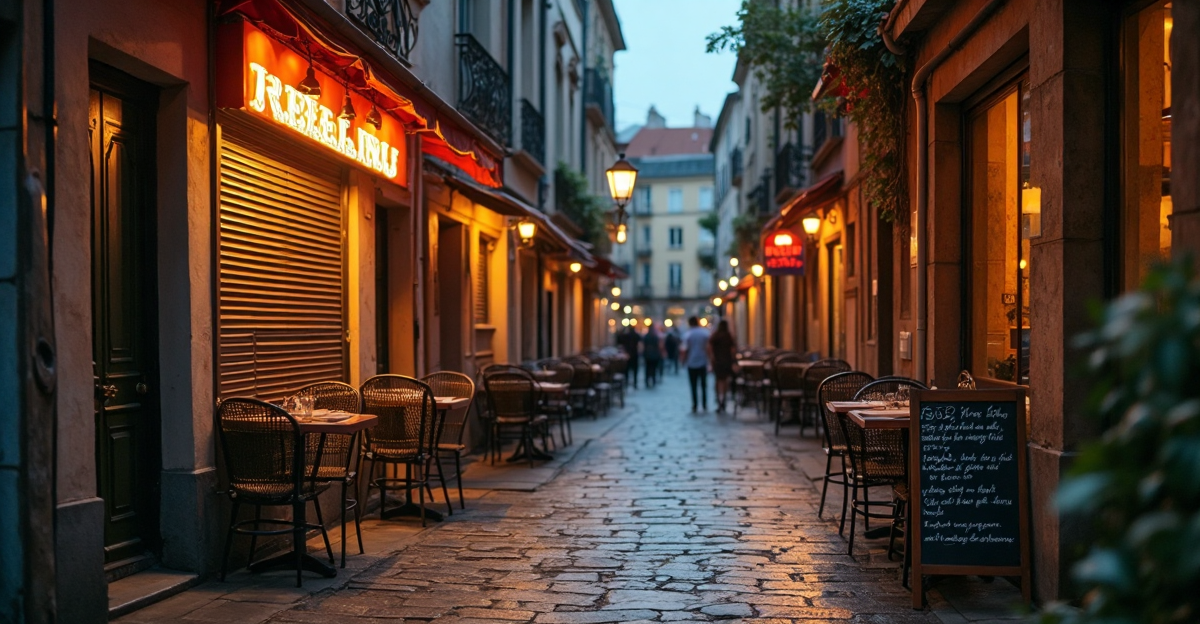
You have planned the whole evening around a place. You know the neighbourhood from the photos, you have the address in your notes, you even asked the hotel which side of the square it is on. And then you stand in front of the door at 21:40 and the sign says the kitchen closed at 21:00 — while the bar, you will learn, was open for another two hours. The listing said 12–23. The listing was not lying. It was describing the bar.
This is the most common way a food app fails someone, and it is worth understanding why, because the fix is not a better app. The fix is knowing which number the number is, and checking the right one.
The two clocks: bar close and kitchen close
Every restaurant that serves alcohol and food has two closing times, and the one on the sign is usually the wrong one for dinner.
- Bar close (or front-of-house close) is when the last drink leaves. This is the number that ends up in listings, because it is the number on the permit, the number on the door, the number the city records.
- Kitchen close is when the kitchen stops cooking. This comes first, and sometimes well first. A place that lists 12–23 may stop taking dinner orders at 21:00 and serve the last plates at 21:15, after which you can sit and have wine until midnight.
The gap between the two is where "open now" goes from helpful to actively misleading. If you are deciding whether to have dinner there, you need the kitchen number, not the bar number. If you are deciding whether to have a drink there, you need the bar number. A listing that does not distinguish the two is usually giving you the bar number, because that is the number most commonly available.
When you call ahead, ask for kitchen close specifically. "When does the kitchen stop cooking?" is the single most useful question a restaurant can answer you before you leave, and almost no digital listing will give it to you. It is also the number that changes most often, because it tracks the kitchen's staffing, not the licence.
Split hours and the midday trap
A meaningful number of restaurants run split hours — open 12–14:30 and 19–23, closed in between. This is especially common in small towns, in tourist areas with a lunch-driven economy, and anywhere the lunch service is the money and the dinner service is a bonus.
The trap is that the split hour is the easiest one to get wrong, because a listing that only captures one of the two windows will show the place as closed at 15:00 when it opens again at 19:00. Or it will show it as open at 15:00 because it is "open 12–23" and the midday gap never got recorded.
If you are planning anything in the middle of the day at a place that does not look like a 24-hour restaurant, assume there is a gap and verify. The phone call takes ninety seconds. If you are trying to do a late lunch and the place you want closed its kitchen at 14:30, the gap is not a small inconvenience, it is the whole plan.
Public holidays: the schedule that does not apply to your day
The listing you are reading was learned from a normal week. Your day is not a normal week.
Public holidays break the pattern in three different ways, and they break it in both directions:
- Many restaurants close entirely on the major holidays of their own country. This is especially true in small towns and in countries where the holiday is a family day. A place that is reliably open on a random Wednesday may be dark on the 25th of December, the day of Eid, or whichever holiday your specific city treats as a non-working day.
- Some places run a shortened or changed service on the day after a public holiday, or on a long weekend.
- Tourist areas sometimes run the reverse schedule and are open only on the weekends and holiday weeks when the tourists are there.
The practical rule: check the local calendar for your specific date, not just the weekday. "Thursday" is not the same thing on a Thursday in September and a Thursday that is a public holiday in April. If the app you are using has a public-holiday layer, use it; if it does not, the phone call is the layer.
The data problem, explained honestly
Most food apps get their hours from one of two sources, and both have a specific failure mode.
OpenStreetMap is crowd-mapped. A volunteer edits the hours, or the place posts them, or a visitor who noticed the door closed updates it. This is excellent in dense city centres where a hundred people walk past the place a day, and patchy everywhere else. A restaurant that changed its schedule six months ago and has not been walked past by anyone who cares to edit it will carry the old schedule. A restaurant that closed permanently last winter and was never deleted will show "open 12–23" indefinitely.
Google and other provider feeds work differently — they scrape the web, scrape their own reviews, and infer from the place's own website or social pages. This is better at catching a closure, because a closed business stops posting, and worse at catching a schedule change, because the schedule change does not announce itself anywhere.
Neither source is authoritative. Both are the best available, and both are stale in the places you are most likely to need them — the small town where you arrived on a Sunday, the restaurant that changed its hours when the chef left, the place that is in the middle of a renovation. The honest framing is: the app gives you the best available starting point. It is not the source of truth. The restaurant is the source of truth.
Walking down the street and reading the sign on the door works. Phoning ahead works. Asking the hotel receptionist works. The app is a way to do the check before you leave the room, so you are not standing in front of a closed door at 21:40 with a group of hungry people and a flight at 09:00. NearEats shows whether a place is open right now, and it flags the things that are likely to be wrong — like a place that is cash-only, or not wheelchair accessible — which is the same category of problem as a schedule you cannot trust. It is one way to do the check, alongside the phone call and the sign on the door. If you are trying to plan the whole late evening — not just whether a place is open, but where food is actually still going out the door at 22:30 in a city you don't know — finding a place open late is the bigger problem, and this post is the first part of it.
What to check, in order
If you are planning an evening around a specific restaurant, the checks are in a specific order, and the order matters:
- The app or the listing, first. This is the fastest check, and it catches the gross errors — a place that is closed today, a place that is permanently closed, a place that does not actually serve food. If the app says it is open, you have saved yourself the cross-town walk. If it says it is closed, you have saved yourself the cross-town walk in the other direction.
- The phone call, if the stakes are high. A group dinner, a dietary accommodation, a last meal before a flight, a place you have driven an hour to get to — the phone call is not optional. Ask for kitchen close, ask about the specific date if it is a holiday week, ask about the specific dietary need if you have one. Ninety seconds.
- The sign on the door, when you arrive. The sign is the source of truth for the day. If the sign contradicts the app, the sign wins. If the sign contradicts the phone call, the sign wins and you should ask why.
The short version
- "Open now" usually means the bar is open, not the kitchen. Ask for kitchen close when it matters.
- Split hours are the most common data gap. If you are planning midday, verify.
- Public holidays break the schedule. Check the specific date, not the weekday.
- The app gives you the best available starting point. The restaurant is the source of truth. The sign on the door wins.
- For anything where a wrong answer costs you an evening, the phone call is ninety seconds and it settles the question the app cannot.
Common questions
Is a restaurant open if its listed hours say it is?
Usually, but not always, and the gap matters most at the edges of the day. A place listed as open 12–23 may close its kitchen at 21 and still be pouring drinks, and public holidays, weekends and split hours routinely break the pattern the listing learned from a normal week. If you are relying on the last hour of service — a late dinner, a pre-flight meal — the app or listing is your first check, not your last: confirm by phone or in person, or keep a backup.
What is kitchen close, and why does it matter more than the posted hours?
Kitchen close is the time the kitchen stops cooking, which at most places comes before the doors close and sometimes well before. The posted closing time is when the last glass of wine leaves the bar, not when the last plate leaves the pass. If you arrive inside the posted hours but after kitchen close, your menu is whatever is still on the grill — or nothing. Ask for kitchen close when you call ahead, especially at dinner; it is the single most useful number a restaurant gives you and almost no listing captures it.
Do opening hours change on public holidays?
Often, and in the wrong direction. Many restaurants close entirely on the major holidays of their own country, or shorten service; some places in tourist areas run the reverse schedule and open only on holiday weekends. A public holiday in one country is a normal Tuesday in another, so check the local calendar for the specific date you need, not just the weekday. This is one of the most common reasons an app confidently shows hours that do not apply to your day.
How reliable are the hours in a food app or map?
Directionally useful, but the data has a life. Most apps get hours from crowd-mapped sources like OpenStreetMap or from provider feeds, and a place that changed its schedule six months ago, closed for renovation, or quietly stopped being a restaurant keeps its old listing until someone updates it. Dense city centres are usually more current than suburbs and small towns. Treat any app's hours as the best starting point you have, then verify for anything where a wrong answer costs you an evening — a last supper before a flight, a group dinner, a dietary accommodation.
Drafted with AI, then reviewed and edited by Robert Jensen before publishing.
Know where to eat before you start walking
NearEats shows the restaurants, cafes and bars around you — with what's open right now, diet options, step-free access and real walking time. One-time $1.99, no subscription.

Keep reading
Eating gluten-free abroad: what to check before you sit down
Gluten-free travel fails less often than you'd expect. The places that fail you are usually predictable — here is how to spot them before the food arrives.
How to find a place open late in a city you don't know
It is 22:30, the flight was long, and every restaurant within walking distance is closing at 22:00. Here is how to find a place that will still be open.