 NearEats
Cash-only restaurants: where they are and how to not get caught out
The card declines, the queue behind you is not amused, and the server has no idea what is going on. The cash-only surprise is rare enough to feel personal — and easy to avoid if you check one thing before you walk in.
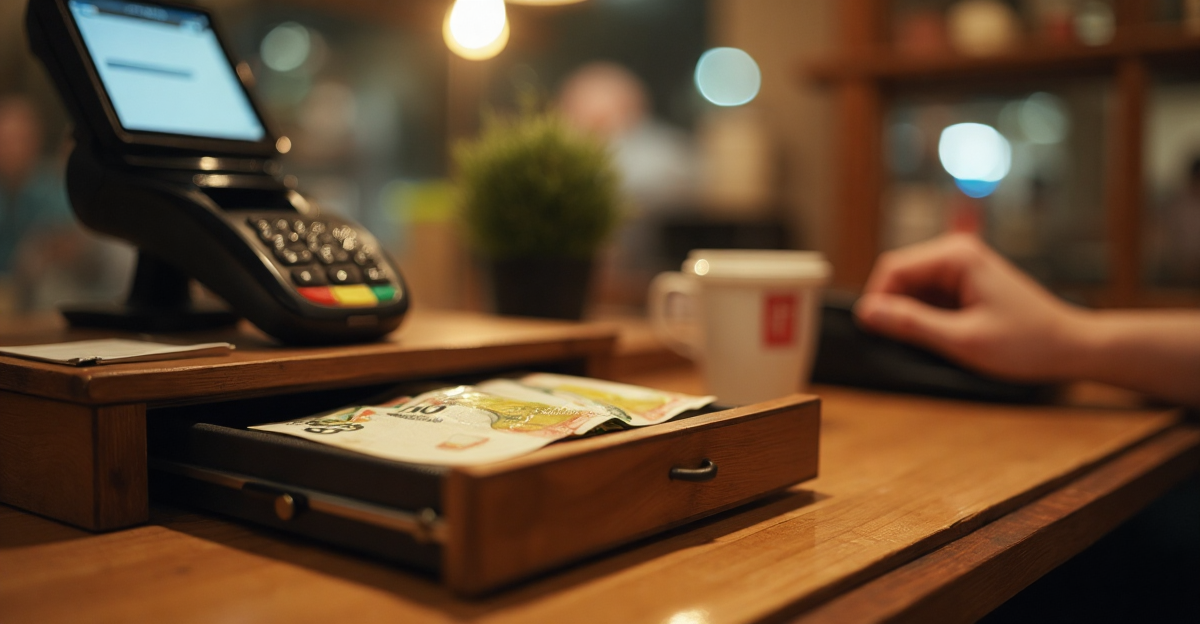
The card declines, the queue behind you is not amused, and the server has no idea what is going on. You have already eaten, the check has already come, and the only working payment method in the room is the one you are not holding.
This is not a once-a-decade situation, and it is not a rich-person problem. It is a category of venue that still runs on cash, a set of national rules that cap how much you can pay with a card, and a small number of checks that settle all of it before you sit down. This is the guide to all three.
Where cash-only still lives
The places that are genuinely cash-only are a small set, and they cluster in predictable patterns:
- Bars and late-night venues. The smallest tickets, the thinnest margins, and the least incentive to keep a card terminal running. In many cities the late-night bar is the most likely place you will be stuck for cash, because by 22:00 you have already burned through the places that took cards.
- Tourist-trap restaurants. The ones on the walk from the station to the hotel. The economics of a low-margin, high-turnover, one-time-customer venue are the same as a bar's, and the customers are the ones least likely to have thought about it in advance.
- Small family-run or single-table places. A two-table place with a hand-written menu has one reason to take cards (the tourists) and one reason not to (the terminal fees and the payout delays). In many small towns the local spots still run on cash.
- Street food and market stalls. In most of Europe and Asia a market stall is a cash transaction. The card reader, if it exists, is a small solar-powered gadget with a three-second grace period and a 50% chance of being out of paper.
The other category — the one people conflate with cash-only — is a country that caps cash payments. These are different animals, and the difference matters at the till:
- A cash-only venue is a place that will not take your card. The answer to "can I pay by card?" is no, full stop.
- A cash-cap law is a rule that says you cannot pay more than X in cash. Above that, the payment has to go by bank transfer or card. The venue will still take your card — the law just tells you that a 12,000-euro dinner at a Michelin restaurant is a wire transfer, not a card swipe.
The two situations need different fixes. The first needs you to know the place before you walk in. The second needs you to know the country before you fly.
The cash-cap map, with the right level of certainty
A handful of countries have capped cash payments in the last decade. The ones most travellers will run into:
- Austria. Since 2025, cash payments are capped at 1,000 euros for most transactions, with a higher allowance for specific categories. If you are eating in Vienna and the dinner is a card, you are fine; if it is a cash bar tab that crosses the line, the bar has to decline.
These are national rules, and they change. A few things to be clear about:
- The list is short and it is not a complete list. Spain, Italy, and most of the rest of Europe do not cap cash payments at the level that would bite a restaurant dinner. The UK has no such cap. The US has no such cap.
- The caps are on the payment, not the venue. A German restaurant does not become "cash-only" because of the 10,000-euro rule. It becomes "cash-cap" — the venue will take a card, and it will take cash below the cap.
- Check the current figure before you fly. These numbers are the kind of thing that shifts with a new government, and a post that gets it right this week and wrong next year is worse than a post that does not name the figure at all. If you are going to rely on a specific number, look it up the week before.
The one number that is safe to say without a date: in the UK and the US there is no national cash-payment cap on restaurant meals. The cash-only problem in those two countries is entirely a venue-level problem, which is the next section.
What a payment failure actually means at the till
When the card declines at a cash-only venue, the situation is worse than it looks, and it is worth understanding why so you can plan around it:
- The server cannot override the terminal. The card terminal is the decision-maker, not the person behind the counter. A declined card is a hard stop, and the server's only option is to ask if you have cash.
- A "card as cash" is a real thing, but only in some places. Some restaurants and bars will accept your card as a cheque — you sign it, they cash it later. This is a system the venue has to have set up with their bank, and it is not universal. If the server does not offer it, it is not available, and asking three times will not change that.
- A phone call to the bank does not work the way you want it to. The card will not start working because your bank says the card is fine. The terminal has already declined the transaction, and a second attempt from the same terminal will produce the same result. The bank call is for the next venue, not this one.
- The queue does not get shorter. This is the social cost, and it is the part that makes the whole thing feel personal. You are the person blocking the bar, and the bar is a cash-only bar, and the person in front of you is the one who just walked in with a wallet full of euros.
The fix is not to have a backup payment method. The fix is to not be at a cash-only venue without knowing it.
The checks that work, in order of reliability
You can settle the payment question from the pavement, the way you settle the open-now question and the dietary question. The checks, from the one that works to the one that does not:
- The payment list on the door. Most venues that are cash-only or cash-restricted put it up front — a small sticker, a hand-written card, a QR code. If the door says "Cash only" or "No cards", the question is settled. If the door says nothing, the question is not settled.
- The venue's website or social profile. The "about" or "info" page is where a cash-only venue will say so, because they want to set the expectation. A venue that takes cards rarely needs to say it, which is the asymmetry that makes the absence of a payment list a weak signal.
- A phone call. The fastest way to settle it if the website is thin. "Do you take cards?" is a two-second question and a yes or a no. If the answer is no, you now have a choice before you walk in, and that is the whole point.
- A details app that flags cash-only places. The payment method is one of the fields that a place can have in a map database, and a few apps — NearEats does it as a red badge on the place card — surface it as a badge rather than leaving it in a paragraph. This is the check you can do while walking over, which makes it the last one in the list and the first one you do. If the badge is not there, the payment method is not in the data, and the question moves back to the door and the website.
- Reviews. People remember the cash-only surprise vividly, which is why "they are cash only" is one of the most reliable things a review will tell you. The catch is the same as with any review — it describes the last time, and a venue that added a terminal last month has not had a chance to update the review.
None of these are a guarantee, and the venue can change the answer between your check and your walk-in. The same logic settles the open-now question — the answer is usually settled before you walk in, and the ones that are not are the ones where the venue is genuinely uncertain. The point is that the question gets asked before you order, not after.
The short version
- Cash-only venues are a small, predictable set. Bars, tourist-ring restaurants, small family places, market stalls. If you are in one of those, the check is worth doing.
- A cash-cap law is not the same as a cash-only venue. The law is on the payment, the venue is on the terminal. A German restaurant does not become cash-only because of the 10,000-euro rule.
- The door, the website, and a phone call settle it from the pavement. The payment list on the door is the most reliable, the website is the most complete, and the phone call is the fastest.
- If nothing says anything, assume you can pay however you like and carry enough cash for one dinner. The assumption that fails is the one you make at 21:30 with a full stomach and a declining card.
- The fix is not a backup payment method. The fix is checking the payment method before you sit down, the same way you check whether the place is open and whether they can feed you. The question moves earlier than the plate.
Common questions
How can I tell a place is cash-only before I sit down?
The reliable ways are the ones you can do from the pavement: the payment list on the door, the venue's website or social profile, a quick phone call, or a details app that flags cash-only places. Reviews can tell you — people remember this one vividly — but they describe the last time, not today. If nothing says anything, assume you can pay however you like and hope for the best, which is exactly the assumption that fails at 21:30 with a full stomach and a declining card.
Is there a limit to how much I can pay in cash?
In some countries, yes — but that limit is on the payment, not the venue. Several European countries cap cash payments: Austria has capped most cash transactions since 2025, Denmark caps at 5,000 kroner, Germany requires a bank transfer above 10,000 euros, and France's cap was 10,000 euros when this was last checked. These are national rules that change, so check the current figure for the country you are in rather than relying on a list. A single restaurant in the UK or US is not under any such cap — it simply may not take cards.
If the card terminal declines, can the server just override it?
No — and this is where the night goes sideways. The terminal decides, the server does not, and a declined card is a hard stop on their end. If the terminal is down, some places will take your card as cash (the card becomes a cheque) or write you into a book, but only if they have a system for it. The useful move is to agree the payment method before the food arrives, not after.
Do I need to carry a lot of cash?
Not much, and not more than you would spend on a single evening out. A small amount of local notes — enough for one dinner plus the bar tab if you are the kind of person who has one — is the amount that solves the problem. You are not trying to pay for the whole holiday in cash; you are trying to not be the person explaining to a stranger that your bank is not available.
Drafted with AI, then reviewed and edited by Robert Jensen before publishing.
Know where to eat before you start walking
NearEats shows the restaurants, cafes and bars around you — with what's open right now, diet options, step-free access and real walking time. One-time $1.99, no subscription.

Keep reading
What open now actually means: why food apps get hours wrong
You plan the whole evening around a place, cross town, and the kitchen closed at 21:00 while the bar does business till midnight. Here is why the sign on the door and the app both got it wrong — and what to check first.
Moving to a new city: finding your regular spots in the first month
The first month in a new city is when you eat well by accident and badly by default. Here is how to turn that into a short list of places you will actually keep going back to.