 NearEats
Vegan while travelling: 'has a salad' vs 'can feed you'
You find one vegan-flagged item on the menu — a side salad, or fries. The real question is whether the kitchen can build you a full meal. Here is how to tell before you walk over.
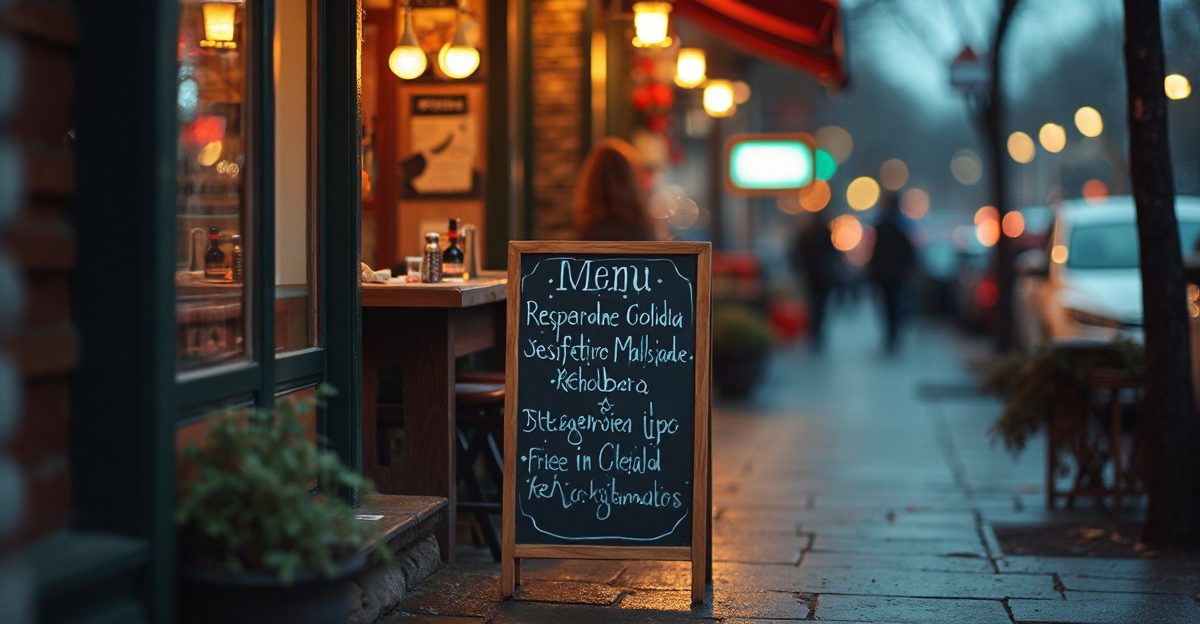
You have landed, you are hungry, and the menu has one green symbol next to it: a side salad, or maybe fries. That is not a meal, it is a garnish. The question is not whether the place has anything vegan — it has, the salad. The question is whether the kitchen can build you a full main course without animal products, and whether you can tell from a distance rather than after a twenty-minute walk to find out the hard way.
The good news is that this is a test you can run before you arrive. A salad on the menu tells you very little. What matters is whether the kitchen is the kind of place that can feed you, and most of the signals are visible ahead of time.
Start with the cuisine, not the menu's vegan symbol
Before you read a single menu line, look at what the place is. Some food traditions are built around plant-based cooking, and in those you will usually find a real main without asking: many Indian and Ethiopian kitchens, the vegetarian traditions of parts of East and Southeast Asia, meze-style Mediterranean plates, and the curry and dhal counters you see across the world. If the restaurant's core is a protein centrepiece — a steakhouse, a grill, classic European fine dining — your options will usually be an afterthought, or a salad.
Treat that as a prior, not a promise. A vegetarian tradition is not automatically vegan: ghee, dairy and eggs appear in plenty of dishes that would otherwise be fine, and honey shows up in sweet ones. And vegan options vary hugely by region, so nothing here is a rule for a country — it is a starting guess about the kitchen in front of you.
The main-course test
Now read the menu for the one thing that matters: a dish that is plant-based by design, not a meat dish with the meat removed.
- A hot dish with a starch, a protein and something cooked — a dhal, a bean or lentil dish, tofu or tempeh, seitan, a grain-and-nut bowl. This is the signal you want.
- A dish you have to assemble from a list of sides — rice, a salad, a dip. That is the "has a salad" answer in disguise.
- A "vegetarian" or "veggie" section, read as a starting list. In many cuisines it still contains dairy and egg, so shortlist the dishes and ask.
A dish that is plant-based by design is a good sign the kitchen can feed you, but it is only a shortlist: a dish without meat can still be made with meat stock, butter or ghee, or egg, so confirm those next (see below). And if the only vegan thing is a bare set of sides you assemble yourself, the kitchen usually is not built to feed you.
Where animal products hide in plant-looking dishes
This is where vegan trips quietly fail, because the dish looks plant-based and the animal product is in the cooking, not on top of it. These are the ones worth asking about, and the real reason for each:
- Broth and stock. Vegetable soups and risottos are often made with meat, chicken or fish stock. The risk is the liquid, not the vegetables.
- Butter and ghee. Ghee is clarified butter, and it is used to finish or fry vegetables across many cuisines. Cream does the same job in soups and curries.
- Eggs. Fresh pasta, some noodles, and some batters and dumplings take egg. Dried pasta in many places does not, so the type of pasta changes the answer.
- Fish sauce, shrimp paste, oyster sauce, and dashi. These season a lot of East and Southeast Asian cooking. Dashi is a stock traditionally made with kombu and bonito, so a "vegetable" miso soup or noodle broth may still carry fish.
- Cheese. All cheese is out for a vegan; some hard cheeses are also made with animal rennet, which is mainly a concern for strict vegetarians.
- Honey and lard. Honey shows up in marinades and sweet dishes, and some fried and baked items — certain beans, pastries, some breads — are cooked in animal fat. These vary by region and recipe, so ask rather than assume.
You do not need every one of these to be absent; the point is that the answer lives in the kitchen, not in the dish name. And your own line on honey, on wine and beer clarified with animal products, and on traces is yours to set — there is no universal standard for where a vegan draws it.
What to ask, and how to ask it so the answer is usable
In many places, staff will hear "vegan" and reach for the salad. The question that gets you a real answer names what you are excluding:
- "What can you make without meat, fish, dairy or eggs?" — not just "is this vegan?"
- "What is the broth made from?" — this is the one that settles the soups.
- "Are the vegetables cooked in butter or oil?" — the one that settles the vegetable dishes.
- "Could the kitchen make me a full dish from these?" — some kitchens will improvise a main when asked; others will not, and you learn which kind it is.
If the menu is not in your language, a short note listing what you do not eat (meat, fish, dairy, eggs) works better than the single word "vegan", because the list is harder to misread. Do not assume the word means the same thing everywhere, or that the staff are trained on it. Asking plainly and specifically is enough.
How to check before you walk over
The manual versions of this work and always will: read the menu posted online, phone ahead, ask a local, or walk past and read the board. What checking first saves is the twenty minutes of walking to discover the only vegan option was a salad. In a tourist ring near a station, options are usually thinner; see how to avoid the tourist-trap ring.
NearEats is one way to do this check: it shows vegan and vegetarian tags from its OpenStreetMap and Apple Maps data, and whether the place is open now, before you set off. Read the tags as an indicator, not a guarantee — they are only as current as their source data, and OpenStreetMap is crowd-mapped, excellent in dense cities and patchy elsewhere, and occasionally out of date. The menu and a phone call still settle it.
The honest limit
Menus change and kitchens change, and a dish that is vegan today can be cooked a different way next week. In many places the word "vegan" on a menu has no legal definition, so a symbol is a claim, not a certification. And in small towns and rural areas the options can be thin — plan a fallback meal for that evening.
One thing to separate cleanly: this post is for a dietary or ethical choice. If your restriction is a milk, egg or fish allergy, that is a different risk profile — the dish that fails you here can send you to a hospital — and the right reading is the severe food allergy guide, not the lighter assumptions this post makes.
The short version
- Look at the kitchen, not the symbol. Plant-based traditions usually have a real main; protein-centrepiece kitchens usually do not.
- Run the main-course test: a plant-based dish on its own beats a list of sides you assemble yourself.
- Ask about the stock, the fat and the eggs by name — that is where the animal product hides.
- List what you exclude; a list is harder to misread than the word "vegan".
- Confirm before you walk over, online or by phone, and treat any tag as an indicator, not a guarantee.
- If it is an allergy rather than a choice, read the allergy guide instead.
Common questions
How do I know if a restaurant has real vegan main courses?
Look for a hot, substantial dish that is plant-based by design, not a meat dish with the meat removed. A dish that has a starch, a protein, and something cooked — a legume dish, a tofu or tempeh dish, a grain and nut bowl — is a different bet from a bare list of sides you assemble yourself. Then check the hidden parts: ask what the broth or stock is made from, and whether the vegetables are finished with butter, ghee or cream. A salad on the menu tells you very little about whether the kitchen can build a full meal.
Is a vegetarian section on a menu the same as vegan?
No. A vegetarian section can still contain dairy, eggs, honey, and in some cuisines fish-based sauces. It is a starting list of dishes worth asking about, not an answer. Read it, shortlist the dishes, then confirm the stock, the fat and the eggs with the kitchen before you order.
Can I rely on a vegan symbol on a menu or in a directory?
Treat it as a starting point, not a guarantee. The meaning and standard behind the word vary by place and by whoever supplies the data, and a symbol only reflects what its source knows at the time. Confirm with the venue before you set off. If your restriction is a milk, egg or fish allergy rather than a dietary choice, that is a different risk profile — read the guide for eating out with a severe food allergy instead.
Drafted with AI, then reviewed and edited by Robert Jensen before publishing.
Know where to eat before you start walking
NearEats shows the restaurants, cafes and bars around you — with what's open right now, diet options, step-free access and real walking time. One-time $1.99, no subscription.

Keep reading

How to find halal food while travelling, without relying on guesswork
Finding reliably halal food in an unfamiliar city is easier than you think — most of it settles in the minutes before you sit down.

Eating out with a severe food allergy abroad: what to check
A severe food allergy in a city you don't know is not a menu-reading problem. It is a kitchen-questions problem — and most of it can be settled before you sit down.