 NearEats
How to find halal food while travelling, without relying on guesswork
Finding reliably halal food in an unfamiliar city is easier than you think — most of it settles in the minutes before you sit down.
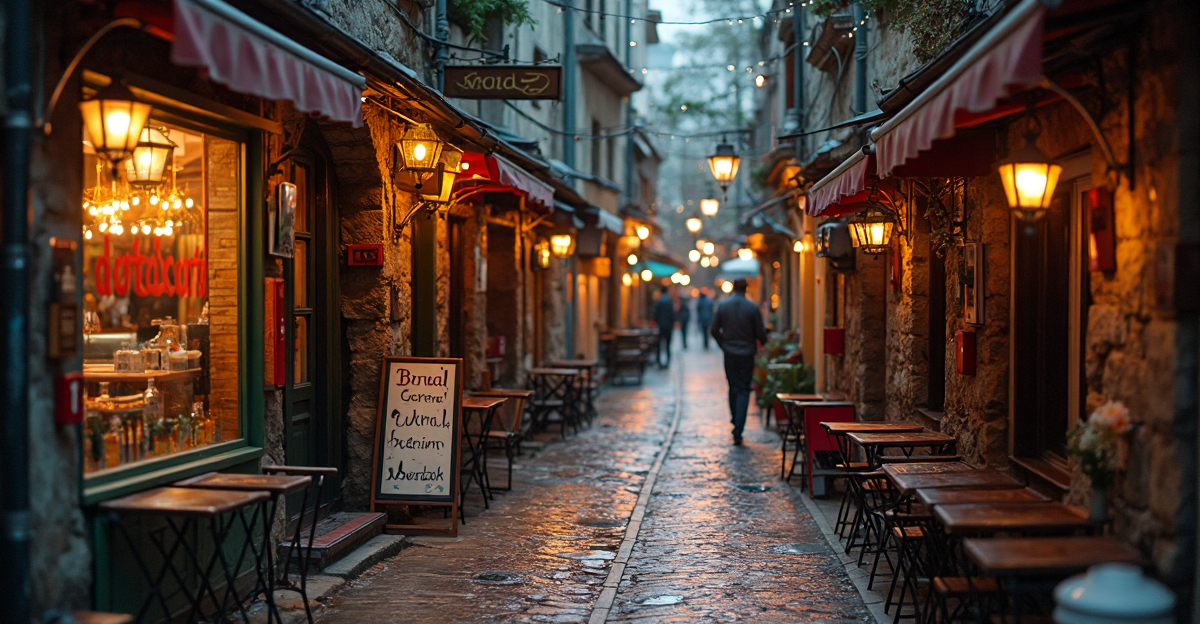
You land in a city where you cannot read the menu, and the question is not really "what's good here" — it's "where can I eat here safely?" For someone observing halal, the answer is usually easier than you'd expect, because the hard part is almost always settled in the few minutes before you sit down. The places that let people down are rarely mysterious. They fail in predictable ways, and each one has a short check behind it.
The good news: a genuinely halal place, in a city you don't know, is almost always findable without a single local, without a phrasebook, and without guesswork. What you need is a method, not a list of restaurants — because a list goes stale, and a method doesn't.
What "halal" actually covers — and where it stops
Start with the most common misunderstanding, because everything else builds on it. A halal label on a restaurant tells you, at its core, where the meat came from and how it was slaughtered. That is the part that matters most and the part most reliably true.
What it does not automatically tell you is what the meat was cooked in. A dish can be halal meat in a non-halal marinade, a non-halal sauce, or on a bed of something that wasn't part of the certification. This is the single most common way a halal-labelled place still serves a dish a careful eater wouldn't want — and it has nothing to do with the kitchen being careless. It's just that the label's scope was about the meat, not the pan.
So the first question is never "is this halal?" in the abstract. It is: which body certifies it, and what does that certification actually cover — the meat, the marinades, the sauces? A place that can name the certifying body and tell you the scope is a place you can eat at with confidence. A place that can't, or that waves it off, has not given you a check yet, only a hope.
One more thing worth knowing before you start: halal certification is not a single worldwide mark. Different countries and different religious communities recognise different certifying bodies, and the mark you look for at home may not be the one that's familiar where you are. You don't need to know them all — you need to recognise the ones your own community does, and treat any unfamiliar mark as "confirm before I rely on it," not "trust blindly."
And one distinction decides everything downstream, so make it first: is the whole place halal, or only the meat? A dedicated halal restaurant runs its kitchen, menu and staff under the certification — everything on the menu is inside it. A regular restaurant that simply sources halal meat may serve you halal chicken on a menu that also has non-halal dishes, a non-halal kitchen and non-halal garnishes. The checks below apply to both, but how much you can assume differs a great deal between them.
The dishes that are safe by construction
Before you worry about the hard cases, build a shortlist of things that are safe by their own recipe. One condition applies to the whole list: this is the list for a place that is halal throughout — a dedicated halal restaurant where the kitchen, the menu and the supplies are all under the certification. At a place that is halal only for the meat, the safe-by- construction list is essentially empty, and every dish below becomes a question instead of a default.
- Plain grilled, roasted or fried meat or fish — no marinade you haven't asked about, no sauce you haven't asked about. The meat is the certified part; keep it plain and it stays inside that.
- Dishes cooked in oil rather than in a thickened sauce — where the cooking medium is a plain oil and the flavour comes from the meat and herbs, there's less that can sit outside the certification.
- Grilled or roasted vegetables and grains that haven't met a sauce — rice, plain vegetables, a plain salad. At a fully halal place these are almost always fine; the moment a dressing or a cooking sauce touches them they become a question, not a guess.
- Bread and staples — at a fully halal place, the bread is part of the certified kitchen and is generally fine. The check is the same one as above: is it actually part of the certified kitchen, or a generic supply?
The pattern: the plainer the dish, and the more its flavour comes from the certified meat and plain cooking, the safer it is — but only inside a kitchen that is fully under the certification. Complicated sauces, thickened gravies and anything "in a reduction" are where the scope of the certification gets thin — that's where you ask, not where you guess.
The dishes that need asking
These are the ones where a short question saves an evening:
- Anything in a sauce, gravy or marinade — "Is the marinade on this halal?" and "Does the sauce contain alcohol?" are the two questions that settle most of them. Some dishes use a wine or alcohol-based reduction as a flavouring even in dishes that are otherwise halal; the question is unambiguous and the answer is almost always a flat yes or no.
- Soups and stews — the classic trap across dietary categories. A broth is only as halal as whatever was reduced into it. Ask what the stock is made from, and whether anything was cooked into the base.
- Desserts and drinks — the least predictable corner. In some systems the certification covers the whole kitchen and menu, including desserts and drinks; in others it centres on the meat, and a dessert or a drink made elsewhere in the kitchen can sit outside it. Ask which one you are in, and treat any unconfirmed dessert or drink as a question, not an assumption.
- Shared-prep dishes — if a dish is cooked on the same grill, in the same pan, or with the same utensils as non-certified food, the cross-contamination question applies the same way it does in any other dietary situation — the same logic that makes a plain grilled fish safer in a gluten-free kitchen — only the kitchen can speak to its own prep.
The through-line is the same as with any other dietary requirement: you can confirm the recipe, but you cannot confirm the kitchen. Asking "does this contain alcohol" gets you a real answer. Asking "is this really halal, not cross-contaminated, cooked on a clean grill today" is a question only that specific kitchen, on that specific day, can honestly answer — and the right move when the stakes matter is to pick a place that can, or to keep the dish plain.
How to confirm before you sit down
This is the part that actually saves the evening, and it takes a minute:
- Shortlist first, then check. You don't need to call every restaurant. Get a short list of candidates near where you are — from an app, a map, a friend, a quick search — and then do the checks on the two or three you'd actually go to. This is exactly where a directory helps: a map that flags which venues around you carry a halal marking gets you from "where is anything?" to "which of these two do I verify?" Walking the street and reading signs works too, and in a smaller town it can be the fastest route.
- Ask which body certifies it, and what the scope is. That one question does most of the work. A confident, specific answer — a named certifier, a scope you can understand, and an answer to "is the whole place certified or just the meat?" — is your green light. Vagueness is not a green light.
- For the specific dish, ask the two sauce questions. "Does this dish's marinade or sauce contain alcohol?" and "Is this cooked in the same kitchen and utensils as non-certified food?" Both have honest, short answers at any competent kitchen.
- When the stakes are high, pick a dedicated venue. If what you're observing is a strict practice and the meal matters, a dedicated halal restaurant or one with a clearly stated, checkable certification is the safer bet than a regular kitchen that has been told to keep things halal. This is the same logic that applies to any dietary requirement: the more dedicated the kitchen, the fewer things can sit outside the scope.
You will not need a phrasebook. The questions above are short, unambiguous, and any kitchen that takes halal dining seriously will answer them without being put on the spot. If a place can't answer "which body certifies you," it is telling you something.
What a directory or app can and can't do
Be honest about the tool, because it is not the whole answer. An app or directory can show you which venues near you carry a halal flag and get you from "I'm standing in a street I don't know" to "here are three candidates within walking distance." That is genuinely useful, and it is the part that saves the most time. What it can't do is tell you the scope of a specific venue's certification, or whether the sauce on a specific dish contains alcohol — those are facts that live in the kitchen, not in the data.
NearEats is one way to do the shortlisting: it shows which restaurants, cafés and bars near you carry a halal flag, alongside whether they're open right now and how far the walk is, so you can pick two or three to check rather than wandering. It is a starting point, not the check itself — the certifying body and the sauce questions still have to be asked to a human. But for the step between "I'm hungry in an unfamiliar street" and "these are my three candidates," it does that job cleanly, and a manual street-walk or a phone call to a friend does the same.
The short version
- **A halal label covers the meat by default — confirm what it covers beyond that.** Which body certifies it, and whether that scope includes marinades and sauces, is the question that does most of the work.
- Safe by construction: plain grilled/roasted meat, dishes cooked in plain oil, plain vegetables and grains, and (at a fully halal place) the bread. Keep the dish plain and it stays inside the certification.
- Needs asking: anything in a sauce, gravy or marinade; soups and stews; desserts and drinks; and anything cooked on shared prep. The two questions are "does the sauce contain alcohol?" and "is this cooked with the same utensils as non-certified food?"
- Shortlist first, then verify. Use a map, an app, a friend or a street walk to get two or three candidates, then ask the certification and sauce questions before you order. When the stakes are high, pick a dedicated halal venue.
- No phrasebook needed. The questions above are short and unambiguous; a competent kitchen will answer them plainly.
Common questions
Is a place marked 'halal' automatically halal?
Usually yes for the meat, but check the scope before you rely on it. A halal label typically covers where the meat came from and how it was slaughtered; it does not always cover marinades, sauces and garnishes, so a dish can be halal meat in a non-halal sauce. When you are in a city you don't know, ask two things: which body certifies it, and whether the certification covers the sauces the dish is cooked in. That is the difference between a claim and a check.
What can I order without asking at a halal place?
At a place you have confirmed is halal — one where the whole menu, kitchen and staff are under the certification — plain meat dishes are your safe core. The things still worth a quick question are marinades, sauces and garnishes, because a dish can be halal meat in a non-halal sauce, plus anything that might contain alcohol. At a place that is halal for the meat only — a regular restaurant that sources halal meat — the safe-by-construction list shrinks: there, even plain dishes are a question, not a default.
Do I need a phrasebook to ask about halal food abroad?
No. The two questions that settle almost everything are: 'Which body certifies this as halal?' and 'Does that cover the sauces and marinades on this dish?' — and the follow-up 'Is there alcohol in this?' Most kitchens and front-of-house staff will answer all of them plainly. Knowing which certification marks your own community recognises makes the first question even easier.
Can a restaurant app find halal food for me?
An app can show you which venues around you carry a halal flag, but a flag is a label, not a guarantee — it does not tell you the scope of the certification or the sauces a specific dish is cooked in. Use it to shortlist candidates, then apply the same checks: confirm the certifying body, then ask about marinades, sauces and any alcohol in the dish before you order.
Drafted with AI, then reviewed and edited by Robert Jensen before publishing.
Know where to eat before you start walking
NearEats shows the restaurants, cafes and bars around you — with what's open right now, diet options, step-free access and real walking time. One-time $1.99, no subscription.

Keep reading
Eating gluten-free abroad: what to check before you sit down
Gluten-free travel fails less often than you'd expect. The places that fail you are usually predictable — here is how to spot them before the food arrives.
Kosher food away from home: planning without a community to ask
Kosher eating away from home is a planning problem, not a search problem. Here is the method — and where it stops being able to help you.