 NearEats
How to find a decent coffee in a city full of chains
You are in a city where every other street corner sells coffee in a paper cup with a logo. Somewhere between those logos, the coffee you will actually remember exists. Here is how to find it.
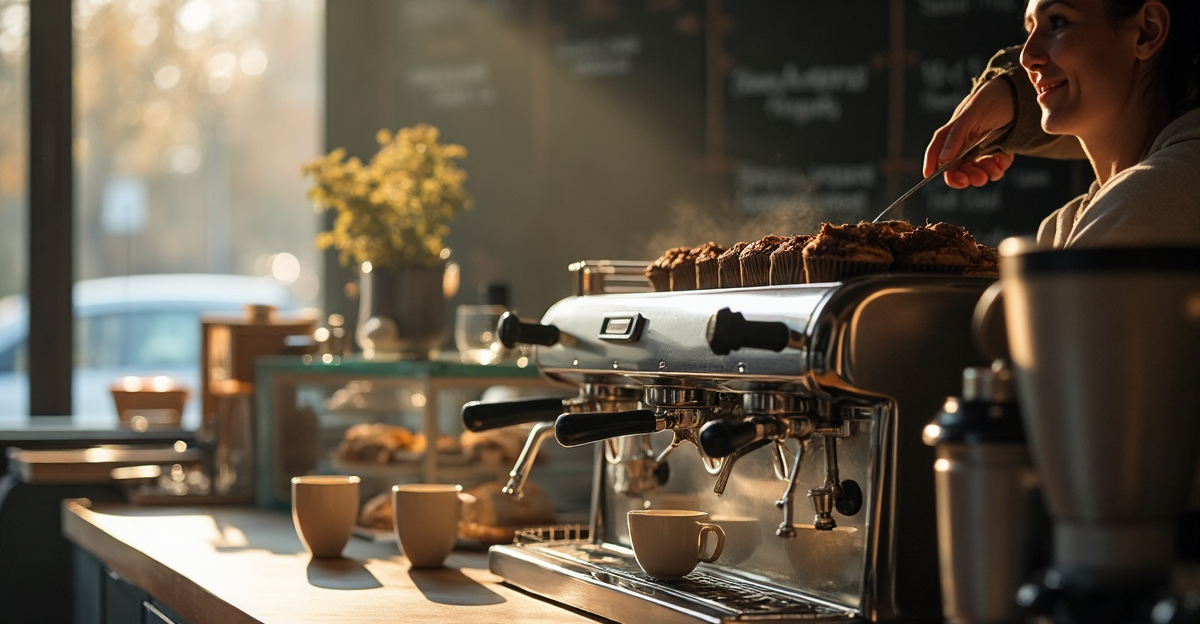
You have landed in a city where coffee is sold everywhere. There is a machine on every corner, a paper cup with a logo in every hand, and a menu of twelve drinks you cannot pronounce in every window. The problem is not finding coffee — it is finding the coffee that is actually good, which is the one place in the whole city that does not look like a coffee brand at all.
The good news is that a serious coffee place gives itself away, and it gives itself away cheaply. You do not need to order an expensive drink to find out; you need to look at three or four things at the counter before you order anything.
The tells at the counter
Walk in and look at the machine before you look at the menu. A cafe that takes espresso seriously has a machine with the dosing equipment visible — portafilters, tamper, a bin for spent pucks — and the barista works around it with some familiarity. A chain location may have a machine, but it usually works around a menu of branded drinks that the machine happens to be able to make, and the difference in how the counter is arranged shows.
The second tell is the coffee itself. Small places keep beans in a container or a bag on the counter or behind the bar, and the label usually names the roaster and often the date of the roast. If the beans are sealed in a branded cup or the label says nothing about origin or roast date, you are in a place that buys its coffee the way a sandwich chain buys its bread. Roast date matters: a bag that was roasted a week ago tastes better than one roasted a month ago, and a cafe that does not care which week it was is telling you something.
The third tell is the menu. A good place has a short menu that names the coffee rather than the drink. "Single origin, Ethiopia, washed" is what you want to see; "Caramel Macchiato, Vanilla Latte, Iced Shaken" is what you do not. The first list means someone chose the beans; the second list means the beans are a by-product of the syrup menu. A filter or pour-over of the day is another sign a place has opinions about what it is serving.
The two street patterns
If you cannot find a good place by walking up to the door, the map itself carries the answer. The first pattern: the tourist ring. The flagged streets around the main square, the station approach and the hotel district are where the chains concentrate, and they concentrate for a reason — the footfall is commercial. One or two streets off those, in the direction of the offices or the residential streets, is where the independent bar almost always lives. The queue of local people at a place with no signage is the single most reliable marker in a city you do not know.
The second pattern: the morning rush. Look at the times. A place that has a line of people at 8:00 in the morning and an empty counter by 11:00 is a workplace — the people who drink there every day are the ones who chose it over the chain on the corner, and that is the review that does not lie. A place that is dead in the morning and packed at midday is serving tourists or lunch, and the coffee is the least interesting part of the offer.
What to ask at the counter
If you are still not sure, the questions are short and the answers are honest, because a place that takes its coffee seriously has a ready answer and a place that does not takes a second to work out the answer. "Where are your beans from?" is the first one; a real answer names a roaster, a region, sometimes a farm. "When were they roasted?" is the second; a real answer is a date, and a good one is recent. "What do you recommend for a filter?" is the third, and it is the one that separates the place with opinions from the place with a menu.
These three questions take thirty seconds and they cost nothing, and they are the exact questions a barista at a good place enjoys being asked.
The limits of the rules
One honest caveat before you treat this as a system: the tells above are for finding good coffee that is accessible without a specialist's eye. They do not cover the places that are brilliant and give nothing away — the corner that looks like a newsagent, the counter in a bakery, the bar that does a pour-over better than half the specialty places in the city. Those places do not show up in a search, and the only way to find them is the slow way: keep a mental note of the ones that were good, and walk the same streets again. A map app is useful for the first pass — NearEats is one such app, and it will show the cafes and coffee shops near you with enough detail to decide before you walk over — but the second pass is the one that turns a city into a place you have coffee habits in.
Also worth saying: the chain is not the enemy. A well-run chain location in a city you do not know is a reliable floor — the coffee is consistent, the latte is fine, the prices are predictable, and if you are hungry and the morning is going wrong, that is the right place. The independent bar is the ceiling. Knowing which is which is the whole game.
One practical note for readers with a dietary requirement: the same counter tells work for a dairy-free or gluten-free morning. If you need to check a cafe before you sit down, the gluten-free abroad guide covers which menu words to read and what to ask.
The short version
- Look at the machine before the menu. Portafilters and a visible dose setup are the tell.
- Look for the roastery and the roast date on the beans. A real date is recent and named.
- Read the menu. If it names the coffee, you are in. If it names the syrup, you are out.
- Walk one street off the tourist ring. The independents live one or two blocks off the flagged streets.
- Watch the queue at 8:00. A morning line of local people is the best review a place can have.
- Ask three questions: where are the beans from, when were they roasted, and what do you recommend for a filter? The answers either settle it or do not.
- Keep a list of the ones that were good. The slow pass is where a city becomes yours.
Common questions
How do you tell a good independent coffee place from a chain at a glance?
Look for three things. First, an espresso machine with portafilters on or near the counter — a real barista pulls shots there. Second, a small menu with a few drinks named by their coffee (a single origin, a filter of the week), not a board of branded product names. Third, the roastery: small places usually write where the beans are roasted, and often when. If all three are there and the queue is short, you are probably somewhere worth sitting down in.
Is 'specialty' coffee automatically better than a chain?
No. 'Specialty' is a marketing word any cafe can print on a cup. What it is worth checking for is what sits behind it: a machine that is cleaned and dosed properly, beans with a roast date rather than a pack date, and a staff member who can tell you the difference between the coffees on the board. A chain's third location rarely has that, and a small place that just bought a machine sometimes does not either — the tells at the counter are what you are actually testing.
Where should I look first if I land in an unfamiliar city?
Walk one street away from the tourist ring. The independent concentration usually starts one or two blocks off the main square or station approach — the side streets with offices and residents, not the flagged streets with the souvenir shops. A second reliable marker is a queue of local people at a place with no signage, which almost always means the coffee is good and the prices are local rather than tourist-priced. Check the roastery and the menu before you order.
Drafted with AI, then reviewed and edited by Robert Jensen before publishing.
Know where to eat before you start walking
NearEats shows the restaurants, cafes and bars around you — with what's open right now, diet options, step-free access and real walking time. One-time $1.99, no subscription.

Keep reading
Eating gluten-free abroad: what to check before you sit down
Gluten-free travel fails less often than you'd expect. The places that fail you are usually predictable — here is how to spot them before the food arrives.
How to find a place open late in a city you don't know
It is 22:30, the flight was long, and every restaurant within walking distance is closing at 22:00. Here is how to find a place that will still be open.